





Treat new bladder changes as a warning, not an inconvenience
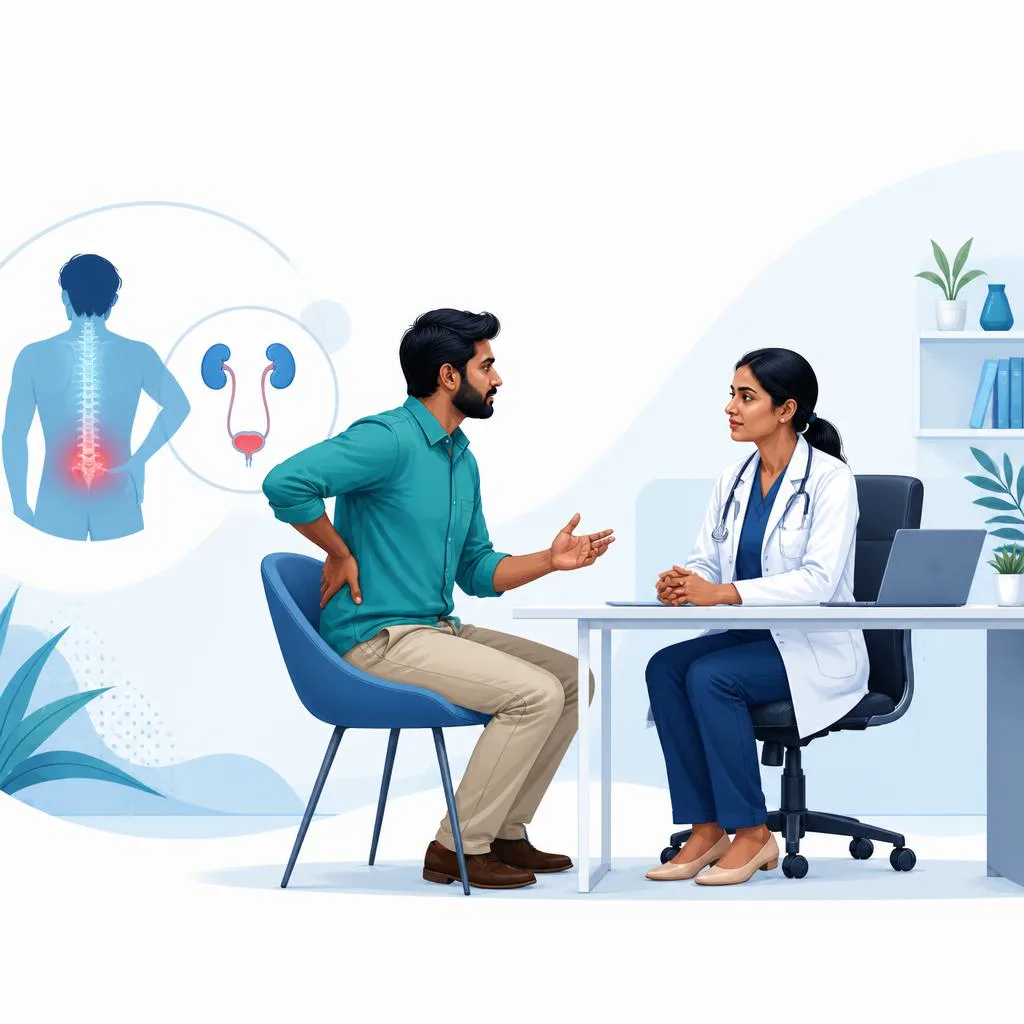
Difficulty starting urination, altered bladder sensation or new loss of control alongside back or leg symptoms may indicate a serious nerve problem. Saddle numbness, bowel changes or progressive leg weakness adds concern. Not every symptom must be present. Seek emergency assessment now rather than waiting for the pain to become unbearable.
What the cauda equina controls
The cauda equina is a group of nerves in the lower spinal canal that contributes to leg, bladder, bowel and sexual function. Compression can affect these functions in different combinations. A large disc herniation is one possible cause, but other conditions can also be responsible. Only examination and appropriate investigation can establish what is happening.
How to explain the problem clearly
Tell emergency staff exactly what has changed and when, including difficulty passing urine, altered sensation or loss of control. Do not describe only “bad back pain” if bladder or saddle symptoms are present. Call 112 or local emergency services when needed and follow their advice. Avoid delaying care to arrange records or contact a preferred outpatient doctor.
Urgent assessment may include MRI
The team assesses neurological function and decides which tests are necessary. MRI is important in many suspected compression cases. A routine outpatient scan booked for another day is not the right substitute for emergency assessment. Do not assume a fixed number of hours is safe to wait because a website mentions surgical timing.
Treatment and recovery are individual
Confirmed compression may require urgent specialist treatment, often surgery. The goal is to relieve pressure and protect function, but recovery is not guaranteed. Bladder, bowel or neurological difficulties may need ongoing rehabilitation and support. Do not use temporary pain improvement as evidence that neurological warning signs have resolved.
Further information and next steps in Sangli
For related evaluation and treatment information, read our [cauda equina syndrome](/departments/neurosurgery/cauda-equina-syndrome) guide. You can also meet [Dr. Rohan Patil](/doctors/dr-rohan-patil), explore the [brain and spine information hub](/brain-spine-centre-sangli), or [contact the hospital](/contact). An online appointment is not an emergency pathway.
References and editorial review
Educational information does not replace an examination. Review is due annually and earlier if evidence or clinical scope changes. Reviewer credits appear only after an actual review of this version.