Deccan Malti Hospital · Sangli

Ambulance Service in Sangli

For ambulance enquiries, contact the hospital to confirm current arrangements and availability.

Appointments, clinician availability and the exact services offered should be confirmed with the hospital team.

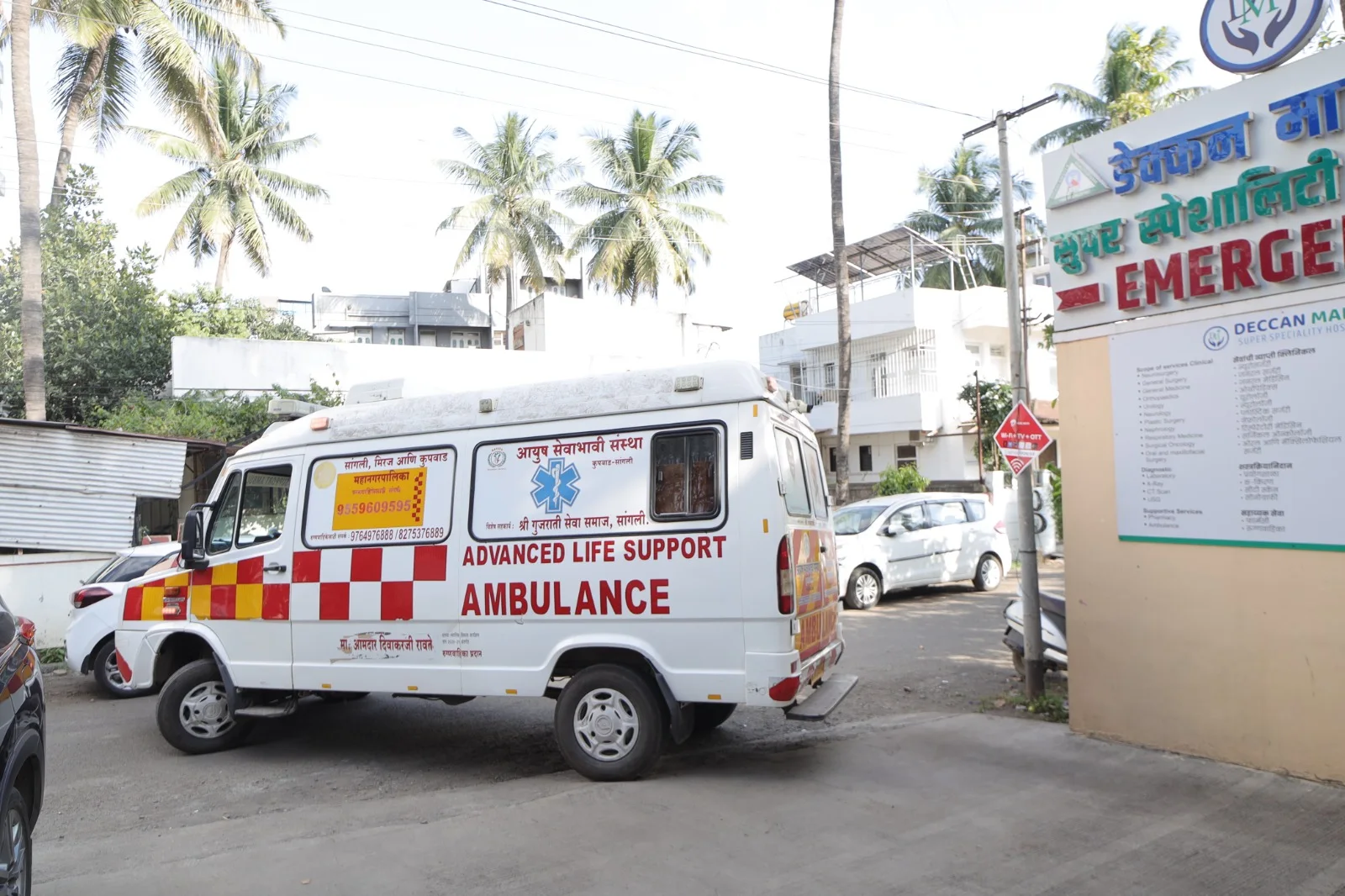
Advanced life support ambulance photographed near a hospital entrance
Hospital photograph. Specific care and equipment depend on the service and clinical plan.
Patient information

About Ambulance Service

For ambulance enquiries, contact the hospital to confirm current arrangements and availability.

This is general educational information. It does not diagnose, recommend a treatment for you, or confirm that every test or procedure described is available at this hospital.

When emergency help is needed

An ambulance may be needed when a person is seriously unwell, injured, unable to travel safely or requires urgent help on the way to care. Examples can include severe breathing difficulty, collapse, heavy bleeding, major injury, sudden weakness or speech trouble, and severe chest pain. When in doubt about an immediate emergency, seek emergency assistance rather than waiting for an online reply.

India’s official Emergency Response Support System uses 112 as a pan-India emergency number. Call 112 for an immediate emergency. The hospital’s listed ambulance service is a separate service whose dispatch coverage, availability, response arrangements, equipment and charges must be confirmed directly with the hospital.

What to tell the emergency operator

Speak clearly and provide the location, a callback number, what happened, how many people need help and whether the person is conscious and breathing. Mention major hazards, severe bleeding, a serious injury or a sudden neurological change. Follow the operator’s instructions and keep the phone available for a callback.

Do not end the call until the operator says it is okay. If someone else is present, ask them to guide responders to the location or gather relevant medicines and identification without delaying help. Do not move a person with a possible serious neck, back or limb injury unless remaining there creates immediate danger.

While help is on the way

Make the area as safe as possible and follow emergency operator instructions. If the person is unresponsive or their breathing changes, tell the operator immediately. Do not give food, drink or medicine to someone who is unconscious or unable to swallow safely. Avoid untrained movement or treatment that could worsen an injury.

If the person has a known condition or takes regular medicines, gather that information for the responders when it is safe to do so. Keep bystanders clear and unlock access routes where possible. The instructions from emergency professionals take priority over general website information.

Confirming hospital ambulance arrangements

For a planned transfer or non-emergency transport, call the hospital to confirm whether an ambulance is available, how to request it, where it can travel, what level of support is provided and whether charges apply. Ask whether a clinician must arrange the transfer and what documents or referral details are required.

Do not assume the hospital ambulance is available at all times, can reach every location or substitutes for the public emergency response number. If the person has a life-threatening or rapidly worsening problem, call 112 rather than waiting to arrange routine transport.

Information to prepare for responders

If it does not delay care, prepare the person’s name and age, a brief medical history, allergies, current medicines, recent reports and the contact information for a family member. Explain when symptoms began and what changed. Do not delay the call to search for paperwork.

Tell responders about pregnancy, diabetes, blood-thinning medicines, implanted devices or other information they ask for. Keep original medicine packaging or a current list if easily available. Share sensitive details directly with care professionals rather than posting them publicly.

After transfer or emergency care

Ask the receiving team how to obtain the visit or transfer record and what follow-up is required. Keep discharge instructions and medicine changes together. If symptoms return or worsen after leaving, use the contact information given by the care team or seek emergency help as directed.

Deccan Malti Hospital lists Ambulance Service in its public service catalogue. This page does not provide real-time dispatch, confirm current vehicle availability, or replace the official emergency response system. For immediate danger in India, call 112; for non-emergency hospital transport, contact the hospital directly.

Plan a visit

Bring the information that helps your clinician

Bring relevant reports, prescriptions, a current medicine and allergy list, and a short timeline of your concern. Confirm appointment availability, preparation instructions, service details and costs directly with the hospital.

  • Write down when the concern began and what has changed.
  • Bring previous reports and images when available.
  • Ask who will review test results and explain the next step.
  • Do not stop prescribed medicines unless your clinician advises it.

When to call emergency services

An ambulance is for an urgent situation where a person may need emergency assessment or help during transport. Examples can include severe breathing difficulty, suspected stroke or heart attack, major injury, collapse, uncontrolled bleeding or a person who cannot be safely transported by other means. If in doubt about an immediate threat, call emergency services.

In India, 112 is the national emergency number. Give the operator the exact location, a callback number, what happened, the person’s current condition and any immediate danger at the scene. Follow the operator’s instructions and keep the phone available in case they call back.

Information to share with the dispatcher

Describe the main problem clearly and say when it began. Mention whether the person is awake and breathing normally, any serious bleeding, known allergy or major medical condition, and whether the location is difficult to find. Do not end the call until the operator says you may.

If it is safe, send someone to meet responders and make the entrance visible. Keep access clear and gather the person’s medicine list or identification if doing so does not delay help. Do not move someone with a possible serious neck or back injury unless there is immediate danger.

While help is on the way

Follow the dispatcher’s instructions and stay with the person if it is safe. Do not give food, drink or medicine unless the emergency operator or a qualified clinician advises it. If the person’s condition changes, call back and update the operator.

Keep children, pets and bystanders away from hazards. If there is traffic, fire, electrical danger or violence, protect your own safety and tell the operator. Do not attempt a procedure you are not trained to perform; follow the instructions provided by emergency services.

Planning a safe handover

When responders arrive, share the timeline, symptoms, known conditions, medicines, allergies and any first aid already given. Tell them about a change in consciousness or breathing. If records are available without delay, bring them, but do not postpone transport to search for paperwork.

At the receiving facility, ask which team will explain the next step and how family members can receive updates with the patient’s consent. Keep the emergency reference or transport details if provided. An ambulance journey does not itself confirm a diagnosis or hospital admission.

Confirming local transport availability

Emergency number 112 connects callers to emergency assistance, but arrival time and the available response depend on location, conditions and current dispatch capacity. This website cannot confirm a live ambulance position or promise a response time. For an emergency, call 112 directly rather than sending a website message.

If you are asking about a particular hospital’s ambulance arrangements or a planned transfer, confirm availability, charges, coverage area and booking steps with the hospital using its current published contact details. Do not assume a listed service means a vehicle is immediately available.

Non-emergency transport questions

A routine appointment or planned transfer may not require emergency dispatch. Ask the care team whether a hospital transport option is available, what it can accommodate and how far in advance it must be arranged. Confirm whether a caregiver should travel with the patient.

If the person’s condition becomes urgent while transport is being arranged, call 112 or seek emergency care. Do not use a web form, social message or ordinary appointment phone line for an immediate emergency. This page provides general guidance, not live dispatch.

Helping responders find the location

Give a precise address, landmark, building entrance, floor and gate instructions. If the location is remote or difficult to access, share a map pin if the operator requests it and keep the phone line open. Arrange for someone to signal responders only if it is safe to do so.

Tell the operator about hazards such as traffic, fire, violence or an inaccessible entrance. Do not put yourself at risk to meet the ambulance. Follow the dispatcher’s directions about where to wait and how to keep the route clear.

What not to delay while calling

Do not delay an emergency call to search for a preferred hospital, complete an online form or gather paperwork. The dispatcher can advise on the response. If the person’s breathing or alertness changes, update the operator immediately.

Do not move someone with a possible serious injury unless there is immediate danger, and do not give food, drink or medicine without appropriate instructions. Keep the person as safe and comfortable as possible while following dispatcher guidance.

Confirming transport and destination details

For a planned transfer, confirm the sending and receiving facilities, the clinician’s instructions, required documents and who is arranging the vehicle. Ask whether medical staff need to accompany the patient and what equipment is available. These details depend on the person’s condition and transport provider.

A hospital website cannot confirm a live vehicle, dispatch priority, arrival estimate or destination. For emergencies call 112; for non-emergency arrangements use verified hospital contact details. Do not assume a routine transport service is suitable for a deteriorating patient.

Providing first-aid information safely

Tell the dispatcher what help has already been given and whether the person’s condition changed. Follow the operator’s instructions and do not attempt a procedure you are not trained to perform. If the scene is unsafe, move to safety and tell the operator.

If the person is unconscious or not breathing normally, say so immediately. The dispatcher may guide you while help is on the way. Keep the line available and update the operator if the situation changes.

After the ambulance reaches care

Share the timeline, medicines, allergies and known conditions with the responders or receiving clinical team. If you do not know an answer, say so rather than guessing. Ask where the patient is being taken and how a family member can receive updates.

Keep any transport or handover information that is provided. An emergency transfer may be followed by tests or observation; the receiving clinician explains the next step. A website cannot provide live updates or confirm a patient’s location.
Patient questions

Frequently asked questions about Ambulance Service

These general answers support a conversation with a qualified clinician; your care plan depends on your individual situation.

What number should I call for an immediate emergency in India?

The Government of India Emergency Response Support System lists 112 as the pan-India emergency number.

Does the hospital ambulance operate everywhere and at all times?

This page cannot confirm live coverage or availability. Contact the hospital directly for dispatch area, hours, charges and arrangements.

Should I wait for a hospital ambulance if someone is critically unwell?

For an immediate emergency, call 112 rather than waiting for routine transport arrangements. Follow the emergency operator’s instructions.

What information should I give the operator?

Give the exact location, callback number, what happened, how many people need help and whether the person is conscious and breathing.

Can I use the website form to request emergency transport?

No. Website forms are not monitored for emergency dispatch. Call 112 for immediate emergencies; contact the hospital directly for non-emergency transport enquiries.

Videos & reels

Ambulance Service videos

Short videos shared by the hospital about this service.

Videos coming soon

The hospital can add service-related YouTube or Instagram videos in the admin panel.

Videos are provided for general information. They do not replace medical advice, diagnosis or treatment.

Help us improve this page

Share feedback about this service information

Your message is sent privately to the hospital team and is not published as a review. Please do not include patient records, test results or other sensitive medical details.

For appointments, use the appointment form. For urgent medical help, call 112 or go to the nearest emergency department.

Provide an email or phone number so the team can respond if needed.

Related services

Explore related care

Deccan Malti Hospital · Vishrambag, Sangli

Have a question about Ambulance Service?

Contact the hospital team to confirm service availability and plan your visit.

Call WhatsApp Book