





Two different aims
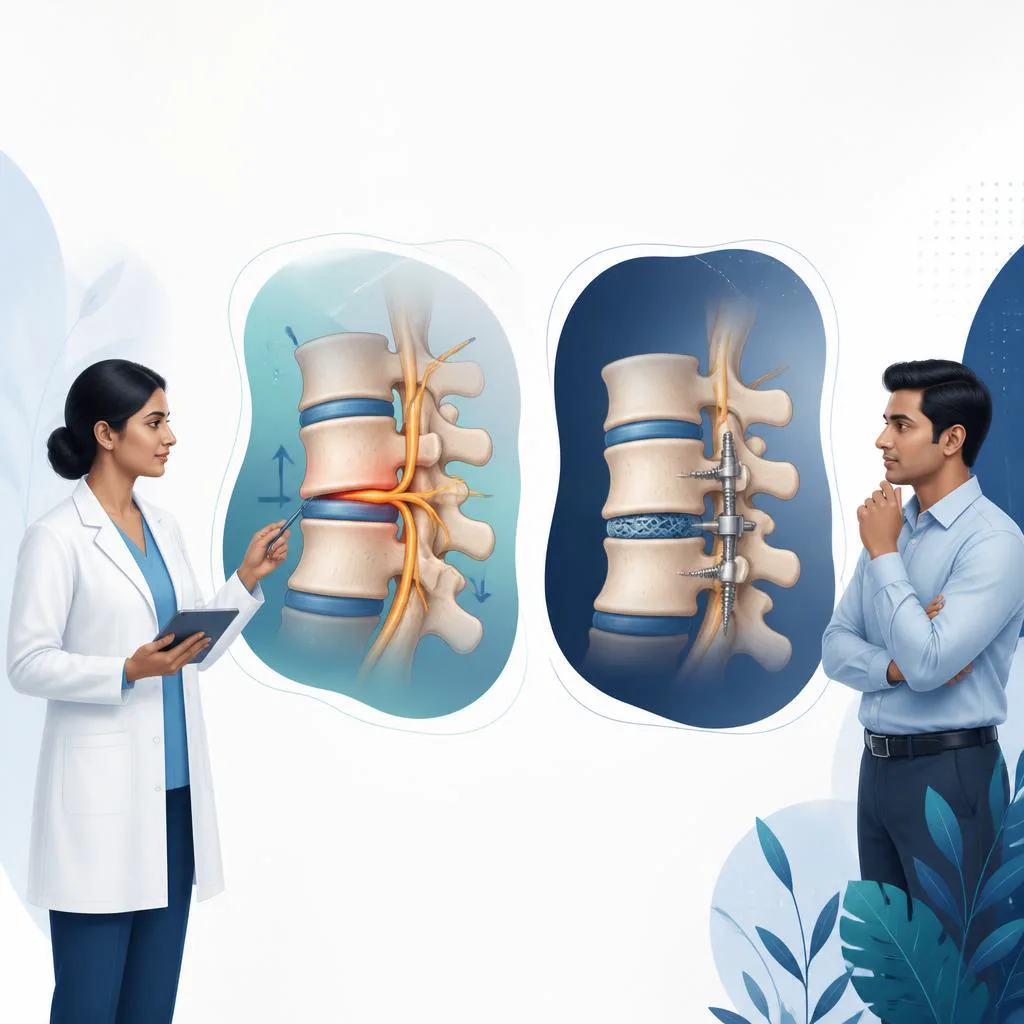
Decompression describes relieving pressure on a nerve or the spinal cord. Fusion describes joining selected vertebrae to create stability. They may be combined in some cases, but one does not automatically require the other. Understanding the aim helps patients ask why a proposed operation fits their diagnosis. Neither term by itself establishes whether surgery is needed.
Why instability matters
A specialist considers alignment, a vertebral slip, movement and other structural factors when evaluating stability. Standing X-rays and other tests may contribute alongside symptoms and examination. Not every slip is unstable, and not every narrowed spinal canal needs fusion. Ask which specific evidence supports stabilisation in your case rather than assuming an implant is always necessary.
Benefits and risks are not interchangeable
A plan should explain the expected effect on nerve pain, back discomfort and function. Fusion can introduce additional healing and implant-related considerations, while decompression has its own risks and limitations. General health, bone quality and the extent of disease affect the discussion. No procedure can guarantee pain relief or eliminate all future spinal problems.
What to ask before deciding
Ask what diagnosis is being treated, whether nonsurgical options remain and why the proposed extent of surgery is justified. Discuss what might happen with decompression alone and why fusion is or is not being recommended. Confirm the procedure, treatment location, implants if any and follow-up arrangements with the actual surgical team.
Recovery depends on the plan
The recovery advice for one operation should not be applied to another. Activity, lifting, work, driving and rehabilitation need individual guidance. New neurological deterioration, saddle numbness or bladder and bowel changes requires urgent assessment. For a planned non-emergency decision, take time to understand the rationale and request a second opinion if you need clarification.
Further information and next steps in Sangli
For related evaluation and treatment information, read our [spinal fusion surgery](/departments/neurosurgery/spinal-fusion-surgery) guide. You can also meet [Dr. Rohan Patil](/doctors/dr-rohan-patil), explore the [brain and spine information hub](/brain-spine-centre-sangli), or [contact the hospital](/contact). An online appointment is not an emergency pathway.
References and editorial review
Educational information does not replace an examination. Review is due annually and earlier if evidence or clinical scope changes. Reviewer credits appear only after an actual review of this version.