





The first decision is urgency, not the scan
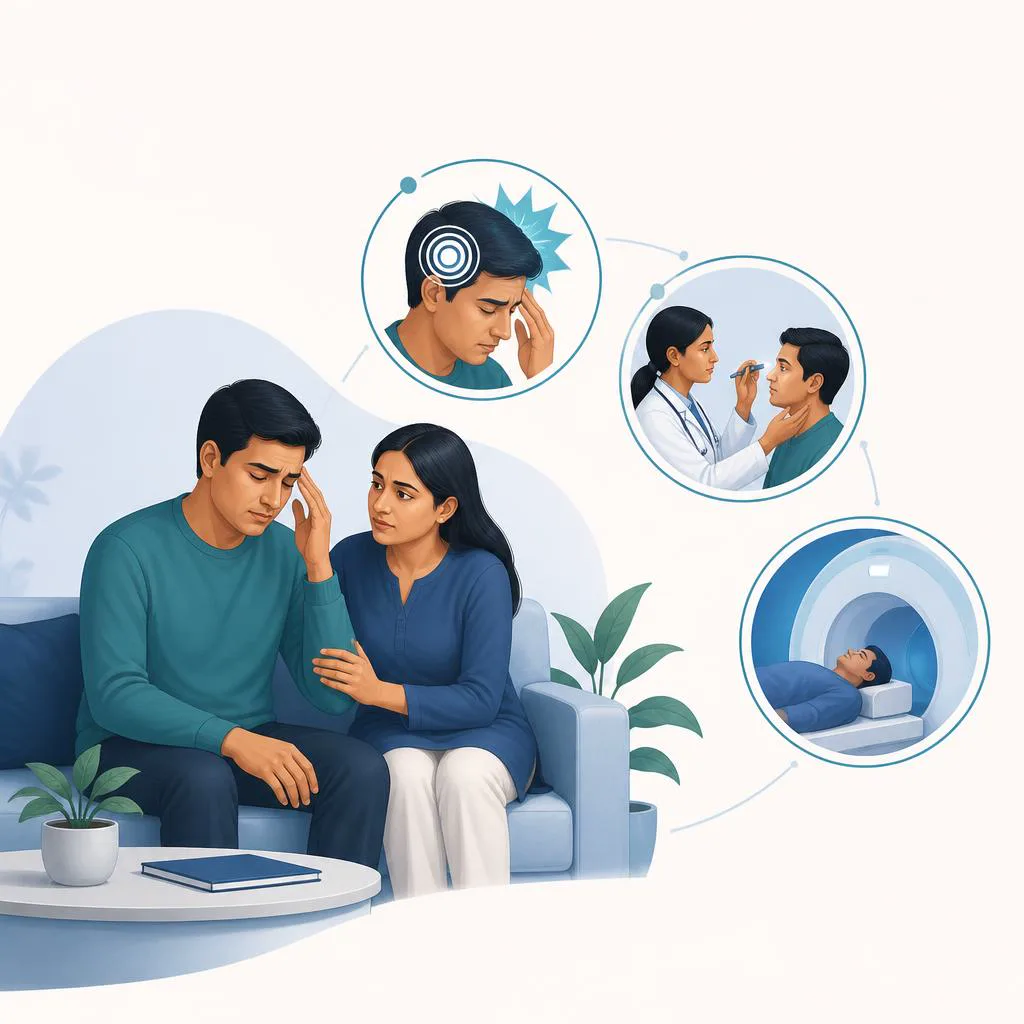
After a blow to the head, the priority is recognising a person who needs prompt assessment. Loss of consciousness, repeated vomiting, worsening headache, unusual drowsiness, confusion, a seizure or new weakness can signal a serious problem. Significant injury to the neck or spine may coexist. Call emergency services when symptoms are concerning rather than arranging a routine consultation online.
Why some injuries need CT and others do not
CT can identify important bleeding and bone injuries quickly. Clinicians use the injury mechanism, examination, age, medicines and symptoms to decide when it is appropriate. Scanning everyone is not necessarily helpful, but refusing assessment because a person “looks fine” can be unsafe. A blood-thinning medicine or a change in alertness is important information for the emergency team.
Concussion may not appear on CT
A normal CT does not exclude concussion, which can cause headache, dizziness, concentration difficulties and other symptoms without a visible structural injury. The clinician may therefore give observation, activity and follow-up advice even when a scan is reassuring. Imaging answers specific questions; it does not replace an examination or tell a family everything about recovery.
What information to take to hospital
If it can be done without delay, describe when the event happened, whether there was a blackout, any memory gap and how symptoms changed. A witness account can be helpful. Tell staff about prescribed medicines and bleeding problems. Do not delay urgent transport while collecting paperwork, waiting for a preferred doctor or checking whether insurance approval is available.
A safe discharge plan includes a return pathway
Follow the written instructions given by the treating team, including observation and return-to-activity advice. New or worsening drowsiness, weakness, seizure, repeated vomiting or increasing headache needs urgent reassessment, including after an earlier normal scan. Returning to sport, work or driving is an individual decision. Another person’s recovery timetable is not a safe substitute for your own clinical advice.
Further information and next steps in Sangli
For related evaluation and treatment information, read our [head injury treatment](/departments/neurosurgery/head-injury-treatment) guide. You can also meet [Dr. Rohan Patil](/doctors/dr-rohan-patil), explore the [brain and spine information hub](/brain-spine-centre-sangli), or [contact the hospital](/contact). An online appointment is not an emergency pathway.
References and editorial review
Educational information does not replace an examination. Review is due annually and earlier if evidence or clinical scope changes. Reviewer credits appear only after an actual review of this version.