




Start with the operation you actually had
Microdiscectomy aims to relieve selected nerve compression from a lumbar disc. Recovery advice depends on the procedure, previous function and neurological findings. This article provides general patient education and does not confirm that the operation is offered locally. Follow the actual treating surgeon’s recovery instructions and confirm any local service availability with the hospital.
Walking and gradually increasing activity
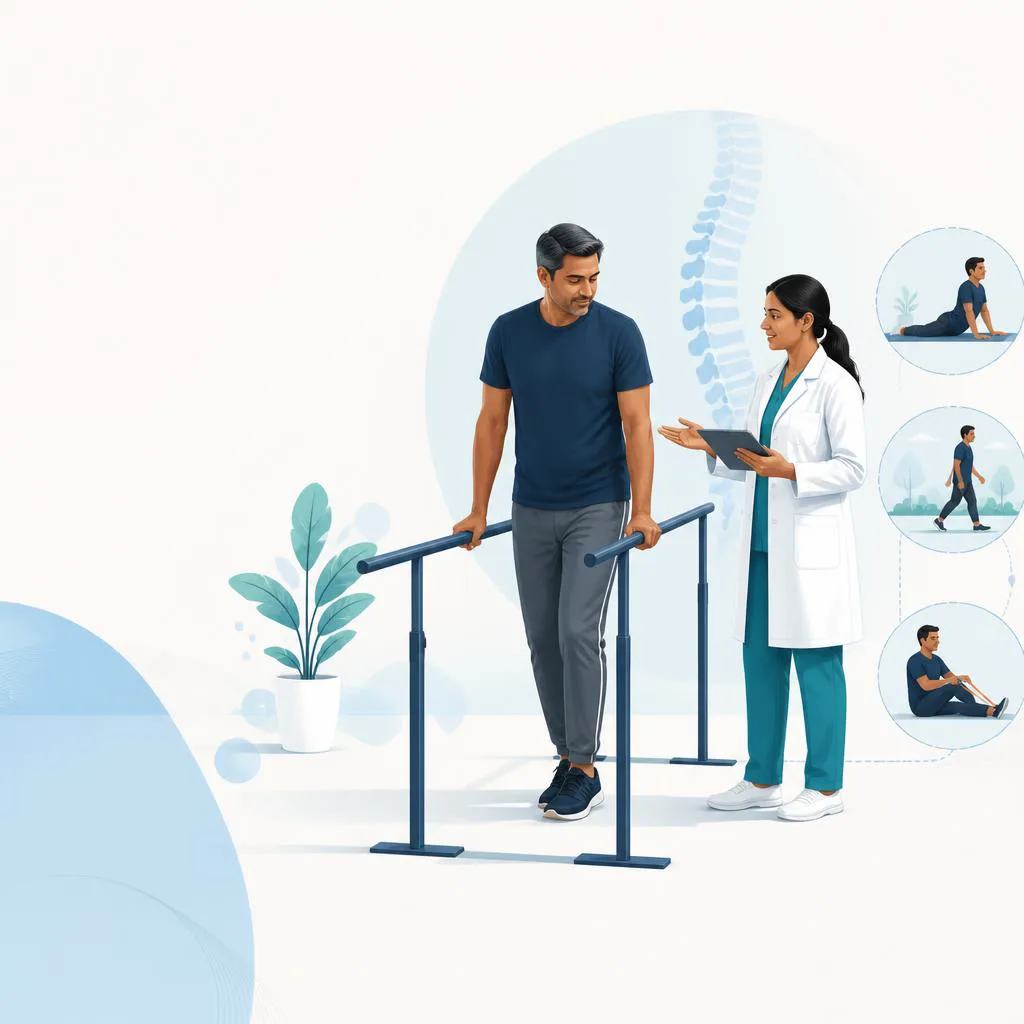
The treating team gives advice about safe mobilisation and progression. Walking is often discussed, but distance, frequency and assistance need individual planning. Do not test recovery by pushing through new neurological symptoms. Wound care, medicine effects and other illnesses also affect activity, so an exercise video cannot replace postoperative instructions.
Returning to work and driving
Desk work and heavy physical work have different demands. Medication, sitting tolerance, strength and the ability to control a vehicle safely matter for driving. Ask for a staged plan tailored to the job and operation rather than assuming a fixed number of days applies to everyone. Follow local legal and treating-team advice where relevant.
Pain, numbness and follow-up
Symptoms may improve at different rates, and longstanding nerve changes may persist. A review can assess wound healing, function and whether symptoms fit the expected course. New or recurrent pain should not automatically be treated by repeating an old medicine. Ask how to contact the team and which symptoms require an earlier assessment.
Warning signs needing urgent advice
New weakness, saddle numbness or bladder and bowel changes needs urgent medical assessment. Fever, wound concerns or significant deterioration also needs the treating team’s advice. Do not wait for a routine follow-up if serious neurological symptoms appear. Recovery goals should be realistic, because surgery does not guarantee complete symptom resolution or prevent every recurrence.
Further information and next steps in Sangli
For related evaluation and treatment information, read our [microdiscectomy](/departments/neurosurgery/microdiscectomy) guide. You can also meet [Dr. Rohan Patil](/doctors/dr-rohan-patil), explore the [brain and spine information hub](/brain-spine-centre-sangli), or [contact the hospital](/contact). An online appointment is not an emergency pathway.
References and editorial review
Educational information does not replace an examination. Review is due annually and earlier if evidence or clinical scope changes. Reviewer credits appear only after an actual review of this version.