





A scan should answer a question
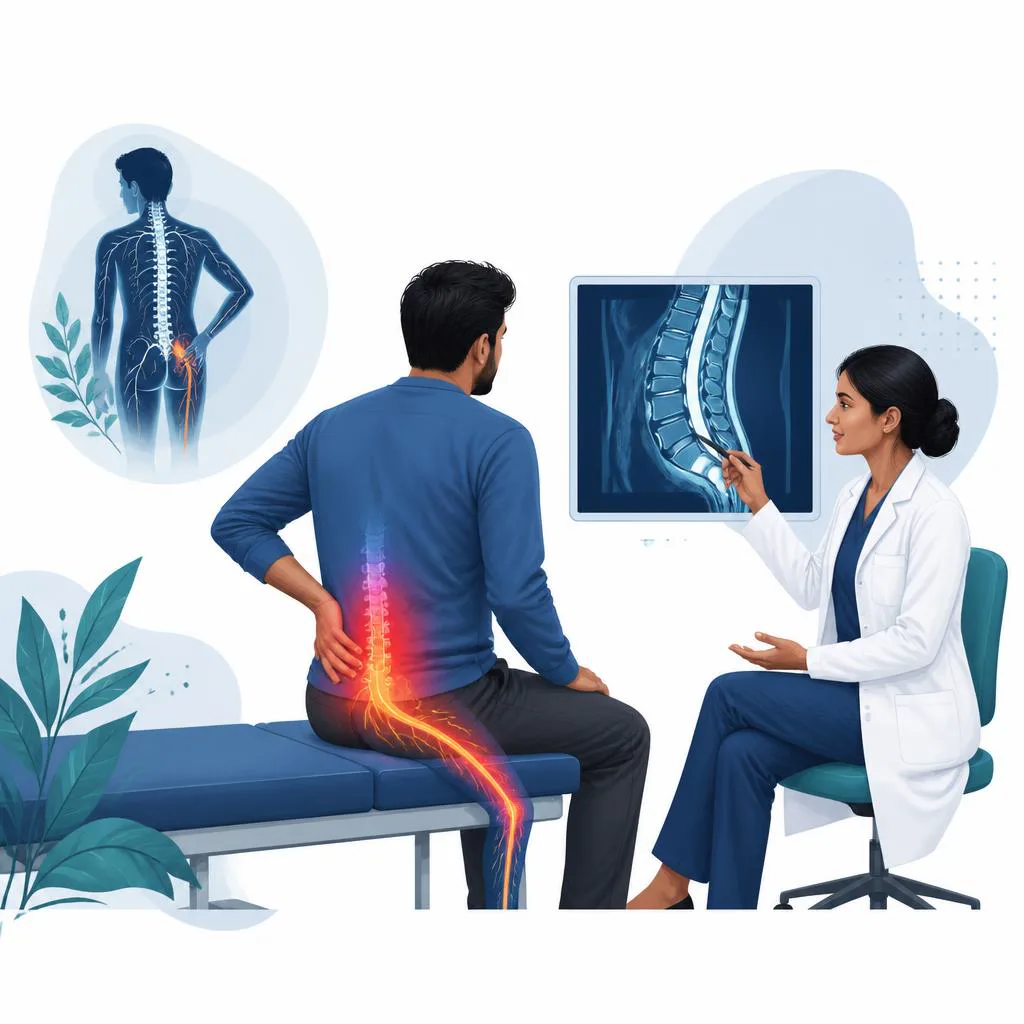
Sciatica describes a nerve-related pattern of leg pain. MRI can show discs, nerves and surrounding structures, but imaging is most useful when it clarifies a suspected diagnosis or changes management. Ordering a scan immediately for every episode may reveal unrelated changes and create confusion. The history and examination help determine when it is appropriate.
Why examination often comes first
A clinician checks the distribution of pain, strength, sensation, reflexes and function. They also consider hip, circulation and other causes of leg symptoms. This makes the scan easier to interpret. A report saying “disc bulge” does not prove that the finding explains the pain, and a scan result should not replace clinical reassessment.
Reasons a scan may become more useful
Persistent or worsening symptoms, neurological deficits or planning an intervention can support MRI. Previous treatment and the clinical context influence timing. There is no universal waiting period that applies to every patient. Tell the clinician if strength, walking or sensation has changed, rather than reporting pain intensity alone.
Red flags change the pathway
New difficulty passing urine, loss of bladder or bowel control, saddle-area numbness or severe progressive weakness requires emergency assessment. Do not book a routine MRI and wait at home with these symptoms. Emergency clinicians assess urgency and arrange appropriate testing. Fever, serious injury or cancer-related concerns can also change what investigation is needed.
Making an existing MRI useful
Bring the original images and the report, along with previous scans if relevant. Explain symptoms as they are now and what treatment has already been tried. Ask which scan finding matches the examination and whether it changes the plan. Repeat imaging is not automatically necessary simply because an earlier scan is no longer recent.
Further information and next steps in Sangli
For related evaluation and treatment information, read our [sciatica treatment](/departments/neurosurgery/sciatica-treatment) guide. You can also meet [Dr. Rohan Patil](/doctors/dr-rohan-patil), explore the [brain and spine information hub](/brain-spine-centre-sangli), or [contact the hospital](/contact). An online appointment is not an emergency pathway.
References and editorial review
Educational information does not replace an examination. Review is due annually and earlier if evidence or clinical scope changes. Reviewer credits appear only after an actual review of this version.