




What a disc does
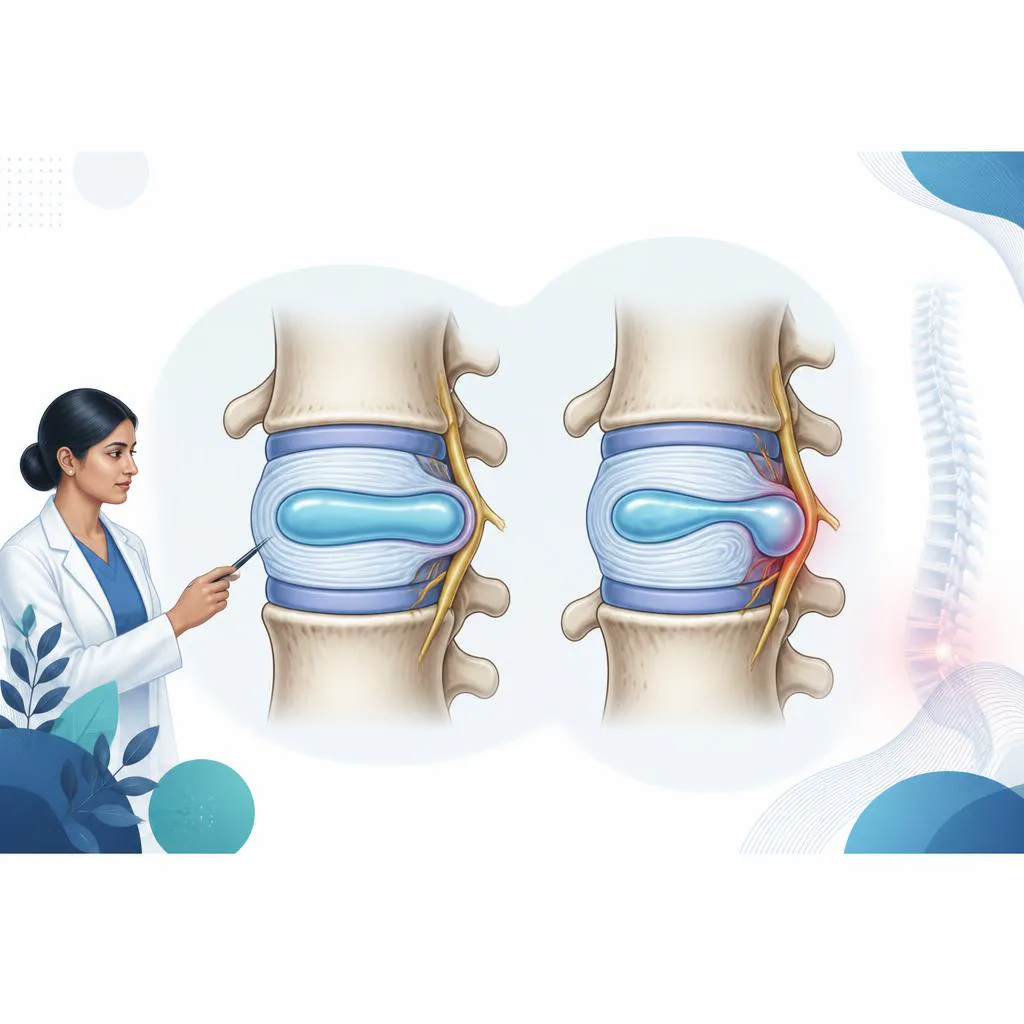
A spinal disc sits between vertebrae and helps absorb load. Its outer ring surrounds softer central material. “Slip disc” is a common informal term rather than a disc literally sliding out of place. Reports may use “bulge”, “protrusion” or “herniation” to describe changes in contour, but a word alone does not establish the cause of pain.
Why scan terminology can sound more alarming than it is
Disc changes can occur in people without symptoms. A report describes anatomy; the clinician determines whether a finding fits the pain distribution, weakness, sensation and reflexes. A small change in a relevant location may matter more than a large unrelated one. Do not choose an operation or exercise programme simply from an isolated scan phrase.
Nerve symptoms help establish relevance
A lumbar disc may irritate a nerve and cause leg pain or sciatica. A cervical disc can affect an arm nerve or the spinal cord. These different patterns need different assessments. Numbness and weakness deserve attention, particularly when progressive. Back or neck pain can also arise from muscles, joints or causes unrelated to a disc.
Treatment is not decided by the label
Many patients begin with appropriate nonsurgical care when no urgent neurological concern is present. Surgery is considered for selected matching compression, persistent disabling symptoms or neurological deterioration. The goal is to treat a defined problem, not make every scan look normal. Ask which symptoms the proposed plan should improve and what would trigger a change in approach.
Warning signs that should not wait
New difficulty passing urine, loss of bladder or bowel control, numbness around the saddle area or rapidly worsening leg weakness needs emergency assessment. These symptoms are not a routine consequence to manage with an old prescription. Call emergency services or attend an appropriate emergency department rather than waiting for a booked consultation.
Further information and next steps in Sangli
For related evaluation and treatment information, read our [slip disc treatment](/departments/neurosurgery/slip-disc-treatment) guide. You can also meet [Dr. Rohan Patil](/doctors/dr-rohan-patil), explore the [brain and spine information hub](/brain-spine-centre-sangli), or [contact the hospital](/contact). An online appointment is not an emergency pathway.
References and editorial review
Educational information does not replace an examination. Review is due annually and earlier if evidence or clinical scope changes. Reviewer credits appear only after an actual review of this version.