




A bone-position problem, not a disc sliding away
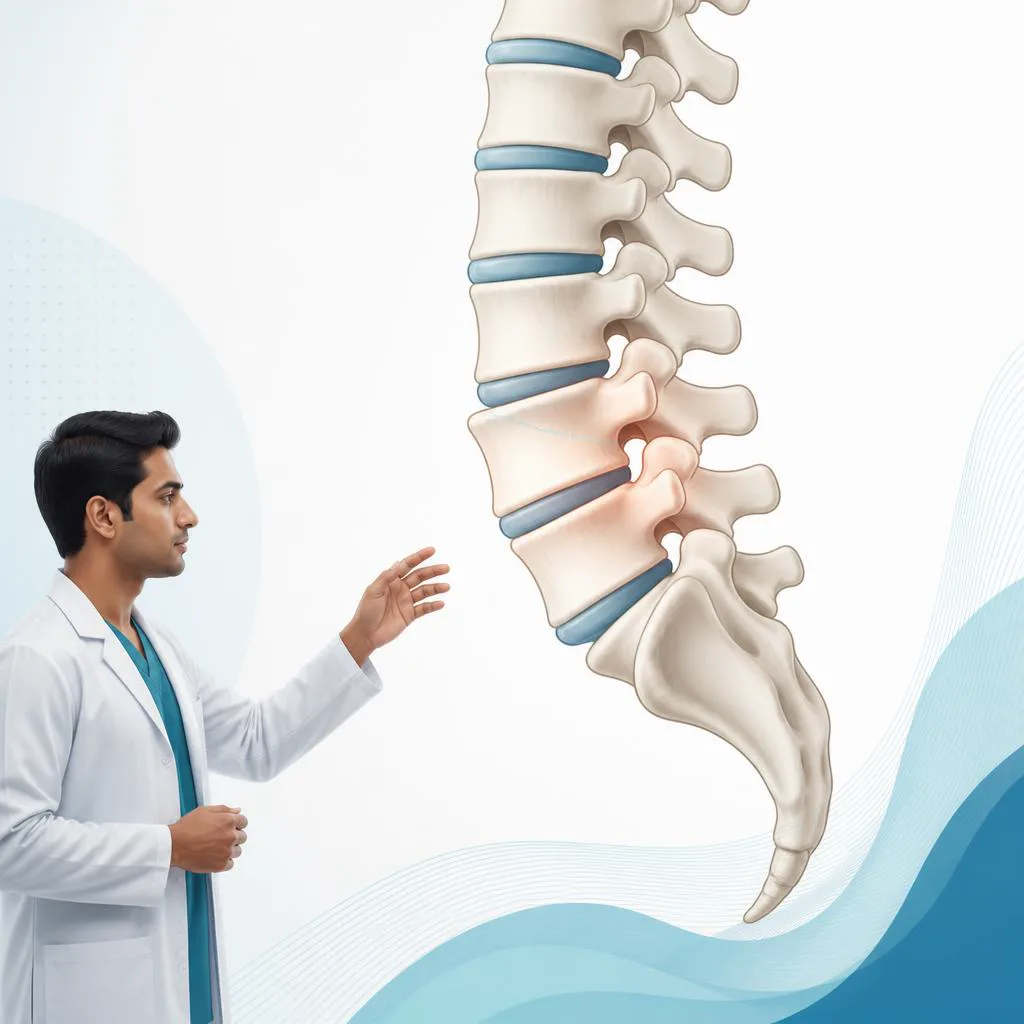
Spondylolisthesis describes one vertebra moving relative to the vertebra below it. A slipped disc describes a change in disc tissue between bones. The conditions can coexist but are not interchangeable. Some people have a vertebral slip without symptoms, so the finding should not automatically lead to surgery.
Symptoms depend on more than the grade
Back discomfort, buttock or leg symptoms and walking limitation may occur, particularly when nerves are affected. The amount of slip is one part of the assessment, not a complete treatment rule. Symptoms, stability, neurological findings and general health matter. Another cause of pain may also need investigation if the pattern does not fit.
Why standing images and MRI may be used
X-rays can help assess alignment and selected questions about stability. MRI can examine nerves and soft tissues when leg symptoms or other findings make it useful. The specialist decides which views are needed. Bring previous scans and reports so the team can understand changes over time rather than relying on one isolated image.
Conservative treatment and surgical choices
Appropriate rehabilitation, activity advice and prescribed symptom control may be suitable initially. Surgery is considered for selected persistent symptoms or neurological indications. Decompression and fusion have different purposes; a vertebral slip does not automatically require an implant. Ask which finding supports the plan and what nonsurgical or alternative options remain.
Safety-net advice still matters
New bladder or bowel problems, saddle numbness or rapidly progressive weakness needs emergency assessment. Do not attribute these changes automatically to an old diagnosis and wait for a routine review. For stable symptoms, a planned consultation can review function, imaging and treatment response and agree a clear follow-up plan.
Further information and next steps in Sangli
For related evaluation and treatment information, read our [spondylolisthesis treatment](/departments/neurosurgery/spondylolisthesis-treatment) guide. You can also meet [Dr. Rohan Patil](/doctors/dr-rohan-patil), explore the [brain and spine information hub](/brain-spine-centre-sangli), or [contact the hospital](/contact). An online appointment is not an emergency pathway.
References and editorial review
Educational information does not replace an examination. Review is due annually and earlier if evidence or clinical scope changes. Reviewer credits appear only after an actual review of this version.