





Spinal Stenosis Treatment in Sangli
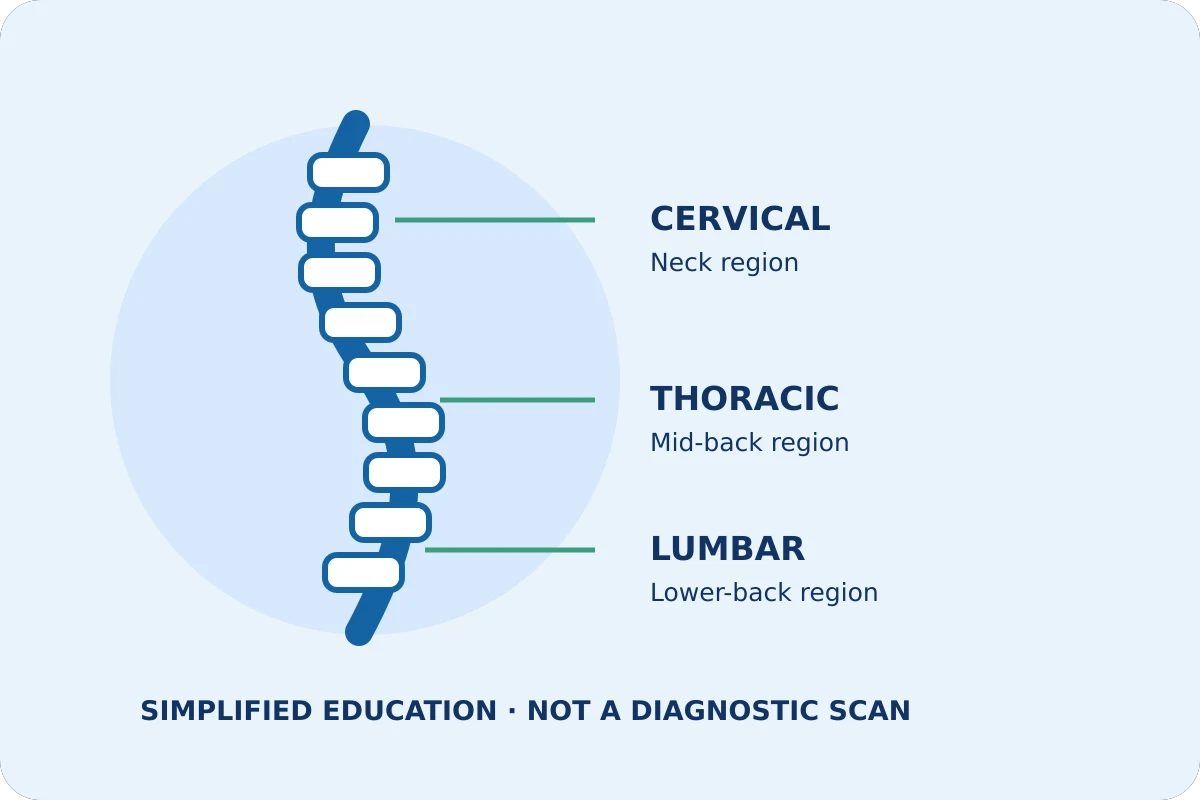
Lumbar spinal stenosis is narrowing of the space available for nerves in the lower back. Some people develop leg discomfort, numbness or weakness when standing or walking, with relief on sitting or leaning forward. Evaluation helps distinguish nerve-related walking symptoms from circulation, hip and other problems before spinal stenosis treatment is planned.
Symptoms and reasons for assessment
These features may justify medical review, but they do not establish a diagnosis. Their onset and progression determine urgency.
- Leg or buttock discomfort when walking or standing
- A need to sit or bend forward for relief
- Numbness, tingling or weakness in one or both legs
- Reduced walking distance or difficulty with daily activities
Why the canal can become narrow
Age-related disc changes, thickened ligaments and enlarged joints can reduce space around nerves. A vertebral slip or spinal curvature can contribute. Narrowing on MRI does not always produce symptoms, so treatment should be based on the person’s problem rather than a scan adjective such as “severe” alone.
Neurogenic claudication and other causes
Walking-related leg symptoms caused by nerve compression are called neurogenic claudication. Circulation problems can also limit walking and require a different approach. The clinician asks how posture, distance and rest affect symptoms and checks the neurological and relevant vascular findings. Coexisting conditions may need more than one specialist’s input.
Imaging and conservative treatment
MRI assesses nerve spaces, while X-rays may help evaluate alignment or instability. Initial treatment can include supervised exercise, activity adjustments and clinician-selected medicines when appropriate. A plan should use achievable functional goals, such as walking tolerance. Symptoms that progress despite treatment require review rather than indefinite repetition of the same exercises.
Decompression and selective use of fusion
Decompression creates more room for affected nerves in selected patients. Fusion addresses instability and is not automatically added to every stenosis operation. The surgical approach depends on anatomy, symptoms, stability and general health. Ask which problem is being treated and why a proposed operation is preferable to continued nonsurgical care.
Recovery and urgent changes
Improvement in walking, leg symptoms and function varies. Rehabilitation and follow-up are individual, especially when weakness or other illnesses are present. New bladder or bowel changes, saddle numbness or rapidly worsening weakness needs emergency assessment. Routine lumbar stenosis advice should never delay evaluation of a possible cauda equina syndrome.
Preparing for a consultation in Sangli
For a planned review, bring original scan images as well as written reports, previous treatment and operation records, a medicine and allergy list, and a short timeline of symptoms. Explain what has changed and how walking, work, sleep or everyday tasks are affected. Do not delay emergency care to collect these documents.
Ask which findings explain your symptoms, whether further tests would change the plan, what nonsurgical alternatives exist, and what any proposed treatment is intended to improve. Discuss risks, practical recovery needs and how results will be communicated. Costs, insurance approval and local procedural availability require case-specific confirmation.
Meet Dr. Rohan Patil, MS, M.Ch (Neurosurgery), explore the spine assessment hub, or use our hospital contact and directions page for Vishrambag, Sangli–Miraj Road, Sangli. An appointment request needs hospital confirmation and is not an emergency assessment.
Frequently asked questions
Does MRI narrowing always require an operation?
No. Symptoms, examination, functional limitation and response to appropriate treatment determine whether surgery should be discussed. A scan alone is not enough.
Does spinal stenosis always require fusion?
No. Fusion may be considered for instability or other specific reasons. It is different from decompression and needs a clear individual explanation.
Why are circulation and hip problems checked?
They can also cause walking-related leg pain. Identifying another or an additional cause helps avoid treating the wrong problem.
What should I bring for an assessment?
Bring original scan images, reports, a medicine and allergy list, previous treatment records and a short symptom timeline. For an emergency, do not delay care while collecting documents.
Can this guide confirm my diagnosis?
No. Similar symptoms can have different causes. A clinician must interpret the history, examination and relevant tests before recommending a diagnosis or treatment.
How do I confirm the treatment location and appointment?
Contact the hospital to confirm the appropriate doctor, date, time and service scope. A booking request is not a guaranteed slot, procedure, insurance approval or bed reservation.
Which new symptoms should not wait for routine review?
Sudden weakness, speech change, an exceptionally severe headache, serious injury, new bladder or bowel dysfunction, saddle numbness or rapid neurological deterioration requires emergency assessment. Call 112 or local emergency services.
References and editorial policy
Original patient-education text prepared from the references above and supplied hospital facts. Content prepared: 22 October 2026. An actual reviewer’s name, qualifications and review date appear only after approval of this exact version. Review is due annually or earlier when evidence, clinical practice or hospital capabilities change. Read the medical disclaimer.