







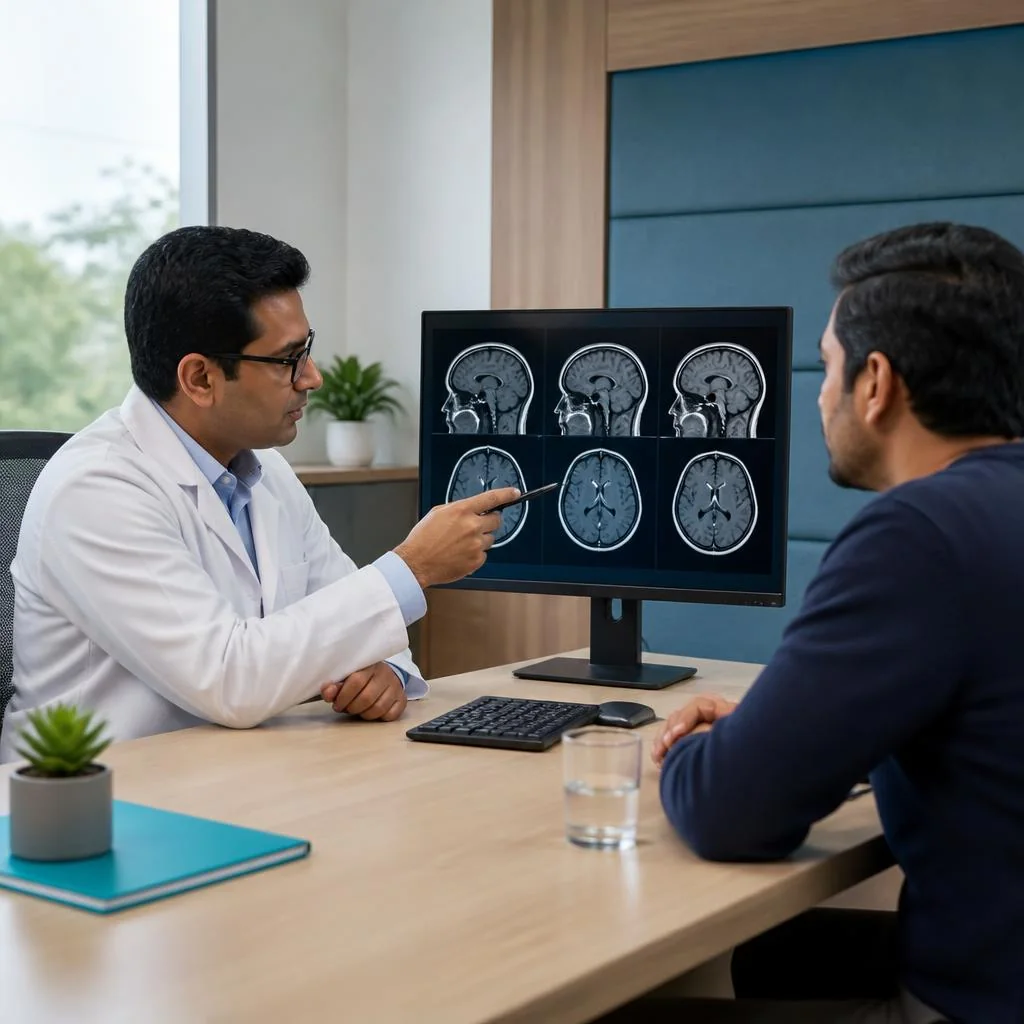
A headache can follow a poor night’s sleep, dehydration, stress or a long day. Most headaches are not caused by a brain tumour. Still, when a headache is new, keeps getting worse, or appears alongside changes in vision, movement, speech or behaviour, it deserves proper medical attention. The important question is not whether every headache needs a scan, but whether the pattern of symptoms suggests that a doctor should investigate further. This guide explains possible brain tumor symptoms, when to seek urgent care, and how doctors decide whether a CT or MRI scan is appropriate. It is general information, not a diagnosis. Only a qualified clinician can assess an individual’s symptoms and decide which tests are needed.
What is a brain tumour?
A brain tumour is an abnormal growth of cells in or around the brain. Some tumours are benign, meaning they are not cancerous; others are malignant. Benign tumours can still cause serious problems if they press on important structures or obstruct the normal flow of cerebrospinal fluid. The effect of a tumour depends on its size, location, growth rate and type—not simply on whether it is cancerous. Symptoms can develop gradually as a growth affects nearby brain tissue, or they may appear more quickly when there is swelling, bleeding or a build-up of pressure. Some tumours are found during imaging performed for another reason and may not have caused obvious symptoms.
Brain tumor symptoms to be aware of
A new or changing headache
A headache alone does not mean that someone has a brain tumour. However, medical assessment is sensible if headaches are new and persistent, become progressively more severe, differ noticeably from a person’s usual pattern, or are accompanied by neurological symptoms. A headache that wakes someone repeatedly, is associated with vomiting, or is worse with coughing or straining also warrants clinical review, especially when it is new or worsening. The timing of a headache is only one part of the picture. A doctor will ask about its onset, duration, location, severity, associated symptoms, medicines and medical history. Do not rely on a checklist to decide whether a scan is necessary.
Seizures
A seizure can sometimes be the first noticeable sign of a brain tumour, including in someone who has never had one before. A seizure may involve jerking movements, a brief loss of awareness, unusual sensations, staring or confusion. A first seizure needs urgent medical assessment. If a seizure lasts five minutes or longer, repeats without recovery, causes serious injury, or the person has difficulty breathing, call emergency services.
Changes in vision, speech or hearing
A person may experience blurred or double vision, loss of part of the visual field, difficulty finding words, slurred speech or trouble understanding others. These symptoms can have many causes, including stroke and eye or ear conditions. Sudden speech or vision changes should be treated as an emergency rather than assumed to be a tumour.
Weakness, numbness or balance problems
A tumour affecting particular areas of the brain may interfere with movement, sensation, coordination or balance. Possible signs include weakness on one side, repeated falls, clumsiness or difficulty walking. New or sudden weakness—particularly on one side—needs emergency evaluation because stroke is one possible cause.
Nausea and vomiting
Persistent nausea or vomiting can occur for many reasons. In some brain conditions, it may be associated with raised pressure inside the skull. Vomiting that is repeated, unexplained, or accompanied by a worsening headache, drowsiness or neurological changes should be assessed promptly.
Changes in memory, concentration or behaviour
Some people notice increasing confusion, reduced concentration, difficulty planning familiar tasks, personality changes or unusual behaviour. These changes can also be associated with sleep problems, medicines, mood conditions, infections and other neurological illnesses. A gradual but unexplained change—especially when it affects daily life—should be discussed with a clinician.
Other symptoms that depend on location
Depending on which structures are affected, symptoms may include changes in smell, hearing, hormone-related functions, swallowing or coordination. No single symptom confirms a tumour, and the absence of symptoms does not completely rule one out.
When should you seek emergency care?
Get emergency help for a sudden, extremely severe headache; new facial drooping or weakness; sudden difficulty speaking or understanding speech; sudden loss of vision; a first seizure; fainting or reduced consciousness; or a severe headache with confusion, neck stiffness or repeated vomiting. These can signal time-sensitive conditions such as stroke, bleeding, infection or another neurological emergency. For symptoms that are not sudden but persist or progressively worsen, arrange a timely medical consultation. Do not delay urgent care while trying to book a routine appointment or waiting for symptoms to settle.
Does every persistent headache require a brain scan?
No. Doctors do not recommend brain imaging automatically for every headache. They first consider the symptom pattern, medical history, age, examination findings and any warning signs. A familiar headache pattern with no concerning features may not require imaging. A new seizure, abnormal neurological examination, progressive symptoms, cancer history or other risk factors may make imaging more appropriate. The goal is to choose the right investigation for the clinical question. Unnecessary scans can create anxiety and sometimes reveal incidental findings that need further assessment without explaining the original symptom.
CT scan or MRI: which is used for brain tumour evaluation?
CT scan
A CT scan uses X-rays to create cross-sectional images. It is quick and often useful in emergencies, particularly when doctors need to look for bleeding, swelling, hydrocephalus or a large abnormality. CT may be selected when speed is essential or MRI is not immediately suitable.
MRI scan
MRI uses a strong magnetic field and radio waves rather than ionising radiation. It usually provides more detailed images of brain tissue and is often preferred when a tumour is suspected or needs closer assessment. Depending on the question, the clinician may request MRI with contrast or a specific imaging protocol. Neither test is right for every situation. Emergency symptoms may call for an immediate CT, while a planned assessment may require MRI. The treating team chooses based on the symptoms, urgency, safety considerations and the information needed.
What happens after an abnormal scan?
An abnormal scan does not automatically mean cancer. Imaging may show a tumour, a non-cancerous growth, inflammation, a cyst, an old injury or another finding. A radiologist interprets the images, and the treating doctor explains what the result means in context. Further MRI sequences, repeat imaging, blood tests, specialist review or—when indicated—tissue testing may be needed. If a tumour is confirmed, management depends on its type, location, size, growth behaviour, symptoms and the person’s overall health. Options may include monitoring with repeat scans, surgery, radiotherapy, medicines or a combination. Not every tumour requires immediate surgery. The risks and expected benefits should be discussed with the treating specialist.
How to prepare for a consultation
Bring previous scan reports and images, prescriptions, a list of medicines, and notes about when symptoms began and how they have changed. Mention any seizure, fainting episode, new weakness, vision changes or relevant medical history. If symptoms come and go, a brief diary can help describe their frequency and duration. For an MRI, tell the imaging team about implanted devices, metal fragments, prior surgeries, possible pregnancy, kidney problems if contrast is being considered, and claustrophobia. Follow the facility’s instructions about preparation; do not stop regular medication unless your clinician tells you to.
Brain and neurosurgical evaluation in Sangli
People in Sangli and nearby areas who have persistent or changing neurological symptoms can discuss them with a qualified medical professional rather than self-diagnosing from online information. Deccan Malti Neuro & Superspeciality Hospital in Vishrambag, Sangli, lists neurology and neurosurgery services. A clinician can review the history and existing reports and advise whether specialist assessment or imaging is appropriate. Availability of specific investigations should be confirmed with the hospital.
Frequently asked questions
What is the most common first symptom of a brain tumour?
Can a brain tumour cause headaches every day?
It can, but daily headaches are much more commonly associated with other conditions. Persistent or worsening headaches should be assessed, especially if they are new or accompanied by vomiting, seizures, weakness, vision changes or confusion.
Is a CT scan enough to detect a brain tumour?
CT can detect many brain abnormalities and is useful in emergencies. MRI generally provides more detail for characterising a suspected tumour. The appropriate test depends on the clinical situation.
Can a brain tumour exist without symptoms?
Yes. Some tumours grow slowly or are discovered incidentally during imaging for another reason. Whether monitoring or treatment is needed depends on the finding and specialist assessment.
Should I see a neurologist or a neurosurgeon?
A neurologist evaluates and treats many nervous-system conditions medically. A neurosurgeon assesses conditions that may require surgical treatment, including selected brain and spine problems. Your first point of contact can help direct you to the appropriate specialist. Emergency symptoms require emergency care.
Where can I seek a brain or nerve specialist consultation in Sangli?
Deccan Malti Neuro & Superspeciality Hospital is located in Vishrambag on Sangli–Miraj Road. Contact the hospital to confirm appointment availability and the services relevant to your concern.
The next step
Do not assume that a headache means a brain tumour, but do not ignore a symptom that is new, severe or progressively changing. A timely clinical assessment helps determine whether observation, treatment or imaging is appropriate. For emergency warning signs, seek emergency care immediately.
Symptoms should be assessed as a pattern
When deciding whether symptoms need investigation, clinicians look at the combination of symptoms and how they evolve. A headache that resembles a person’s usual migraine and responds to their established treatment is different from a first, rapidly worsening headache with vomiting or new weakness. A symptom that is mild but steadily changing can also deserve attention. The key is not to compare yourself with another person’s experience; brain conditions can present differently, and the same symptom can have several explanations.
Can lifestyle changes prevent a brain tumour?
There is no proven lifestyle routine that can guarantee prevention of a brain tumour. General measures such as avoiding tobacco, using seat belts and helmets where appropriate, and managing established health conditions support overall health, but they should not be presented as a way to prevent every tumour. Be cautious about online claims that a particular food, supplement or detox can remove a tumour. If a scan has identified an abnormality, discuss it with the treating specialist instead of delaying assessment to try an unproven remedy.
Why follow-up matters
If a scan shows a finding that does not need immediate treatment, the clinician may recommend repeat imaging. Follow-up is not the same as ignoring the problem: comparing scans over time can help determine whether a finding is stable or changing. Keep copies of reports and images, attend the recommended review, and ask what symptoms should prompt earlier contact. If symptoms worsen before the planned follow-up, seek medical advice rather than waiting for the next scan.
Questions to ask at the appointment
It can be helpful to leave a consultation with a clear plan. Ask what diagnoses are being considered, whether any symptoms require urgent action, and what would make imaging necessary. If a scan is recommended, ask what the test is intended to clarify and when you should expect the report. If no scan is recommended at that visit, ask which changes should prompt reassessment and whether a planned follow-up is appropriate. These questions help turn a worrying symptom into a practical next step without assuming the worst or overlooking a change that matters. Bring a family member if you find medical information difficult to remember, and ask the clinician to explain unfamiliar terms in plain language. A written plan can be particularly useful when symptoms fluctuate or more than one investigation is being considered.