







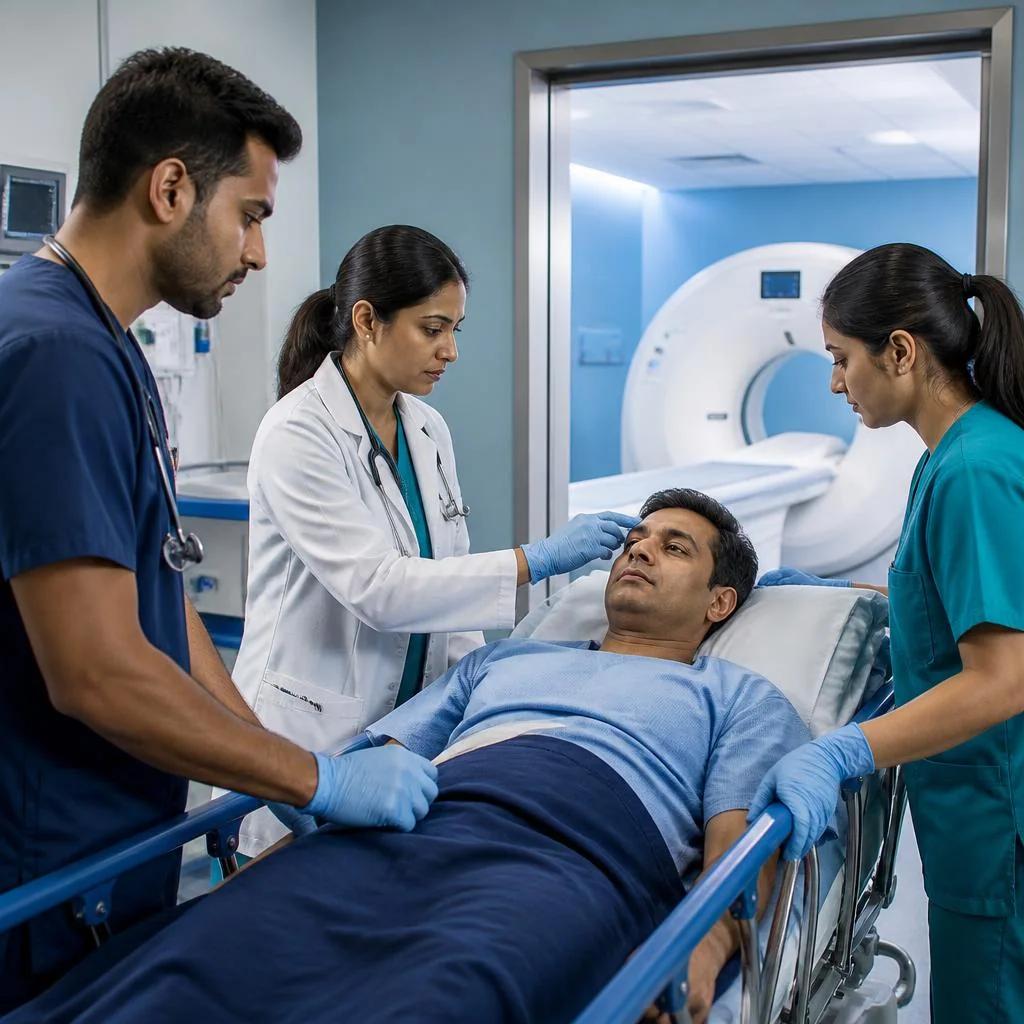
A brain haemorrhage is bleeding in or around the brain. It can be life-threatening, and symptoms may develop suddenly. The most important thing to remember is simple: do not wait for every warning sign to appear. Sudden severe headache, weakness, speech difficulty, seizure, confusion or reduced consciousness can indicate a neurological emergency. Call emergency services or get immediate emergency medical help. This article explains common brain haemorrhage warning signs, possible causes, how doctors investigate bleeding and what families can do while help is on the way. It is not a substitute for emergency assessment or individual medical advice.
What is a brain haemorrhage?
A haemorrhage occurs when a blood vessel ruptures and blood escapes into brain tissue or the spaces around it. Bleeding can damage brain cells directly, raise pressure inside the skull and reduce the supply of oxygen to surrounding tissue. The effects depend on the location, amount and cause of bleeding and how quickly treatment begins. The term “brain haemorrhage” can refer to different types of bleeding, including intracerebral haemorrhage within brain tissue and subarachnoid haemorrhage in the space around the brain. Bleeding can also occur after a head injury. These conditions differ, but all suspected acute brain bleeding needs urgent medical evaluation.
Brain haemorrhage warning signs
Sudden, extremely severe headache
A sudden headache that reaches peak intensity very quickly—often described as the worst headache of a person’s life—can be a warning sign of bleeding around the brain. It may also have other serious causes. Do not wait to see whether it improves, and do not drive yourself if you feel unwell.
Weakness or numbness on one side
Sudden weakness or numbness of the face, arm or leg, particularly on one side, may signal a stroke or another acute brain problem. A person may drop objects, be unable to raise one arm, or develop facial drooping. Treat this as an emergency even if symptoms improve.
Trouble speaking or understanding
Slurred speech, difficulty finding words, confusion about simple instructions or inability to understand what others are saying can indicate an acute neurological event. Note the time symptoms began, if known, and share it with emergency staff.
Vomiting, dizziness or loss of coordination
Some people experience vomiting, dizziness, difficulty walking or loss of coordination. These symptoms are not specific to haemorrhage, but sudden onset—especially alongside headache, weakness or confusion—needs emergency assessment.
Seizures
A seizure can occur when bleeding irritates brain tissue. A first seizure needs urgent medical evaluation. Call emergency services if a seizure lasts five minutes or longer, repeats without the person regaining awareness, causes injury, or is associated with breathing difficulty. Do not restrain the person or put anything in their mouth.
Drowsiness, confusion or unconsciousness
A person may become unusually sleepy, disoriented, difficult to wake or unconscious. This can indicate serious brain injury or rising pressure inside the skull. Seek emergency help immediately.
Neck stiffness or sensitivity to light
Bleeding into the space around the brain can cause a sudden severe headache with neck stiffness, nausea or sensitivity to light. These symptoms may overlap with other serious conditions, including infection. They need urgent assessment rather than home treatment.
What should you do if you suspect a brain haemorrhage?
- Call emergency services immediately. Explain the symptoms and when they began. Follow the dispatcher’s instructions.
- Do not wait for symptoms to pass. Temporary improvement does not rule out a serious event.
- Do not give food, drink or medicines by mouth if the person is drowsy, confused, having trouble swallowing or not fully alert.
- Do not give aspirin or other medication on your own. Bleeding and clot-related strokes require different management; the wrong medicine can be harmful.
- Keep the person safe. If unconscious but breathing normally, follow the emergency dispatcher’s advice about positioning. If they are not breathing normally, follow instructions for CPR.
- Note the last time they were well. This timing can help clinicians make urgent decisions.
- Gather medication information if it is immediately available. Tell emergency staff about blood thinners, antiplatelet medicines, recent injuries and relevant medical history, but do not delay the call to collect paperwork.
If symptoms are sudden, emergency assessment is more important than searching online for a diagnosis or arranging a routine specialist appointment.
What causes a brain haemorrhage?
Possible causes include long-standing high blood pressure, a ruptured aneurysm, abnormal blood vessels, head trauma and certain bleeding disorders. Medicines that affect blood clotting can increase bleeding risk in some circumstances. The cause varies by the type and location of bleeding, and sometimes more than one factor is involved. High blood pressure is an important risk factor for some types of intracerebral haemorrhage. Managing blood pressure and following medical advice for prescribed medicines can help reduce certain risks, but it cannot prevent every haemorrhage. Do not stop blood pressure medicine or blood thinners without the clinician’s guidance.
How is a brain haemorrhage diagnosed?
Doctors assess the person’s symptoms, neurological function, vital signs, medical history and medicines. A CT scan of the head is commonly used urgently because it can rapidly identify many types of acute bleeding. Additional tests may include CT angiography, MRI, blood tests or other vascular imaging, depending on what doctors suspect and what they need to learn. A scan is interpreted alongside the examination. If bleeding is found, the team will assess its location, extent, cause and effect on pressure inside the skull. Treatment decisions depend on these findings and the person’s condition.
How is a brain haemorrhage treated?
Treatment varies. It may include close monitoring, management of blood pressure, reversal of certain blood-thinning medicines when appropriate, treatment of raised pressure, seizure management and intensive care. Some patients need a neurosurgical procedure or a procedure to treat the underlying blood vessel problem. Not every haemorrhage requires surgery, and not every patient follows the same pathway. The aim is to prevent further injury, manage the cause and support recovery. After the acute phase, some people need rehabilitation for movement, speech, swallowing, thinking or daily activities. Recovery depends on the location and severity of bleeding, the speed of treatment and other health factors.
Who may be at higher risk?
Risk depends on the type of haemorrhage. Factors can include uncontrolled high blood pressure, certain vascular abnormalities, head injury, bleeding disorders, heavy alcohol use and use of anticoagulant medicines. Age and other medical conditions may also affect risk. Having a risk factor does not mean bleeding will occur, and a person without known risk factors can still experience a haemorrhage. Prevention is focused on the risks that can be changed: monitor blood pressure, take prescribed treatment as directed, discuss medicine risks with a clinician, use appropriate safety measures to prevent head injury and seek medical advice about known vascular conditions. There is no home method that can safely rule out a brain bleed after warning symptoms begin.
Brain haemorrhage vs a clot-related stroke
A stroke can happen because a blood vessel is blocked by a clot or because a vessel ruptures and bleeds. Both can cause sudden weakness, speech problems, vision changes, balance difficulties or confusion. Symptoms alone cannot reliably distinguish them. This is one reason urgent brain imaging is important: treatment for a clot-related stroke can differ substantially from treatment for bleeding, and some medicines used for clots may be unsafe in a haemorrhage. Use the same emergency response for sudden stroke-like symptoms: seek immediate medical care.
What should family members watch for?
Family members are often the first to notice that something is wrong. Pay attention to a sudden change from the person’s normal state: new slurred speech, one-sided weakness, a severe headache, repeated vomiting, unusual confusion or difficulty waking. If you suspect a neurological emergency, act rather than waiting for confirmation. Keep emergency contacts accessible and, where possible, know the person’s regular medicines and significant medical history. These details can help the hospital team, but collecting them should never delay emergency help.
Emergency neurological care in Sangli
In Sangli and nearby areas, suspected brain haemorrhage requires immediate emergency medical assessment. Deccan Malti Neuro & Superspeciality Hospital in Vishrambag, Sangli, lists neurosurgery and hospital services. For sudden warning signs, call local emergency services or go to the nearest appropriate emergency department immediately; do not delay care to confirm routine appointment availability. If planning non-emergency follow-up after hospital treatment, contact the hospital to confirm the appropriate specialist and appointment arrangements.
Frequently asked questions
What is the first warning sign of a brain haemorrhage?
Can a brain haemorrhage happen without a headache?
Yes. Some people may have neurological symptoms without a prominent headache. Sudden weakness, speech changes, confusion or reduced consciousness still require emergency evaluation.
Can symptoms of a brain bleed come and go?
Some neurological symptoms can fluctuate, but improvement does not mean the danger has passed. Seek emergency help for sudden stroke-like symptoms even if they resolve.
Should I give aspirin if I suspect a stroke?
No—not unless a medical professional specifically instructs you to do so. A stroke may be caused by bleeding, and aspirin can be inappropriate in that situation. Emergency clinicians need to assess the cause.
Is every brain haemorrhage treated with surgery?
No. Treatment depends on the type, location, size, cause and effect of bleeding. Some patients need surgery or a procedure; others receive intensive medical management and monitoring.
Can high blood pressure cause brain haemorrhage?
Long-standing or severe high blood pressure is an important risk factor for certain types of bleeding in the brain. Blood pressure should be managed with professional guidance, but never change prescribed treatment on your own.
How is brain haemorrhage confirmed?
Doctors commonly use an urgent CT scan to look for acute bleeding. Further vascular imaging, MRI or laboratory tests may be required to investigate the cause or guide treatment.
When should I go to the hospital?
Immediately if there is a sudden severe headache, new weakness, facial droop, speech difficulty, seizure, confusion, repeated vomiting with neurological symptoms or reduced consciousness. Do not wait for a routine appointment.
Remember: time matters
A brain haemorrhage is a medical emergency, and symptoms can overlap with other serious neurological conditions. Recognising the warning signs and seeking emergency help quickly gives the medical team the best opportunity to assess the cause and begin appropriate care. When in doubt about sudden neurological symptoms, do not wait.
Why you should not try to diagnose the stroke type at home
A blocked blood vessel and a bleeding blood vessel can produce similar symptoms. It is not possible to distinguish them reliably by looking at the person or asking whether the headache is severe. Treatment choices depend on the cause, and medicines that may be used for a clot-related stroke can be harmful in some bleeding situations. Emergency assessment and brain imaging allow clinicians to determine the likely type and choose appropriate treatment.
After emergency treatment: recovery and follow-up
Recovery after a brain haemorrhage varies widely. Some people regain function quickly, while others need a longer period of hospital care and rehabilitation. Depending on the effects, follow-up may involve physiotherapy, occupational therapy, speech and swallowing assessment, medication review and support for everyday activities. Families should ask the treating team about warning signs after discharge, medicine instructions, blood pressure follow-up and whom to contact if new symptoms develop.
Do not overlook prevention after recovery
After the immediate emergency has been treated, the medical team may investigate why bleeding occurred and which risk factors can be addressed. This may include blood-pressure management, reviewing anticoagulant or antiplatelet medicines, and investigating an aneurysm or vascular abnormality where appropriate. Patients should not stop or restart blood-thinning medicines independently. Follow the discharge plan and attend specialist reviews, even if the person feels much better.
A note about emergency numbers and transport
Use the local emergency number and follow the dispatcher’s advice. If an ambulance is available, it can be safer than attempting to transport a person whose consciousness or breathing may deteriorate. Do not let the person walk around to prove that they are feeling better, and do not leave them alone while waiting for help. If they vomit or become less alert, tell the emergency dispatcher immediately and follow the instructions provided. Keep the route clear for responders and share the time symptoms began, known medical conditions and medicines when asked. These practical steps support emergency care but never replace the urgent assessment itself.